
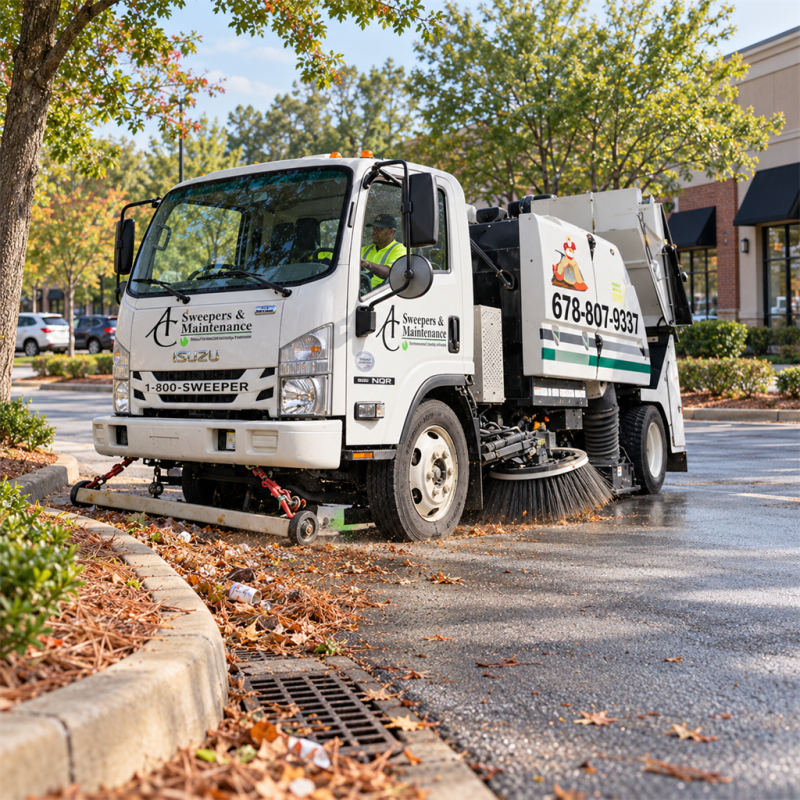
Atlanta street sweeping frequency should follow the amount and type of debris a road or property produces—not a rigid calendar that remains unchanged all year. A busy retail center may need nightly service, while a quiet residential street may need only several planned sweeps per year. Construction traffic, tree cover, drainage, vehicle turnover and seasonal weather can all justify a more aggressive schedule.
AC Sweepers & Maintenance has served Metro Atlanta since 2000. In our experience, the right Atlanta Street Sweeping schedule removes red clay, grit, leaves, litter and operational debris before they become a drainage, safety, pavement or appearance problem.
Recommended Atlanta Street Sweeping Frequency
The ranges below provide a practical starting point. Every municipality and commercial property should adjust its schedule based on actual conditions, observed debris and site requirements.
| Property or roadway type | Recommended baseline | Why the frequency may be needed |
|---|---|---|
| Active construction sites | Daily to multiple times per day when conditions require | Red-clay trackout, dust and sediment can accumulate rapidly and migrate toward public roads and storm drains. |
| Busy retail parking lots | 3–7 times per week; nightly service is often preferred | High vehicle turnover, drive-thrus, food tenants and shopping carts generate litter, food waste, oil residue and constant curb-line debris. |
| Office or industrial properties | Weekly to biweekly | Offices need consistent curb appeal, while industrial yards may produce grit, packaging, pallet fragments or metal debris. |
| Apartments and HOAs | Biweekly to monthly | Routine service controls dumpster-area litter, windblown trash and organic material collecting in neighborhood gutters. |
| Municipal residential roads | 3–4 planned sweeps per year | Seasonal passes can address leaves, pollen, sediment and neighborhood gutter accumulation. |
| Arterial and commercial roads | Monthly, with more frequent service in problem areas | Higher traffic, commercial activity and greater pollutant loading create faster accumulation. |
These are AC Sweepers’ operational baselines—not universal legal requirements. Construction projects must follow their applicable permits and erosion, sedimentation and pollution-control plans. Georgia’s current construction stormwater permits remain in effect through July 31, 2028, and site-specific conditions determine what controls and service frequency are appropriate. Property managers and contractors should review their own requirements rather than assuming one schedule satisfies every site.
Why a Fixed Annual Atlanta Street Sweeping Schedule Fails
The biggest scheduling mistake is treating Atlanta Street Sweeping every month as if it produces the same debris load. Atlanta’s tree canopy, spring pollen, red clay and sudden storms create noticeable seasonal swings.
Fall leaf drop: October through December
Leaves and pine straw can cover curb lines quickly. Once saturated by rain, this organic material becomes heavier, blocks drainage paths and may require slower passes or different equipment. Apartments, HOAs and office parks that normally receive biweekly service may need weekly sweeping during peak leaf drop.
Spring pollen and seed accumulation: March through May
Pine pollen and oak tassels can form a thick layer along gutters and catch basins. When mixed with rain and road grit, the material becomes a dense organic sludge. Temporary frequency increases help intercept it before the next storm moves it into drainage infrastructure.
Summer storm debris: June through August
Strong afternoon storms move pine straw, branches, mulch and loose gravel into parking spaces, travel lanes and pedestrian areas. Retail centers and commercial properties should consider as-needed post-storm service when debris creates a drainage, appearance or trip-hazard concern.
The U.S. Environmental Protection Agency recommends flexible street-sweeping schedules based on traffic volume, land use, field observations of sediment and trash, and proximity to surface waters. The agency also advises increasing service in identified areas of concern. That supports a practical approach: establish a baseline, inspect results and change the frequency when conditions change.
Warning Signs Your Property Is Not Being Swept Often Enough
AC Sweepers’ operators usually see physical signs first. Account managers often see the operational and financial consequences that follow.
What sweeper operators notice
- Packed curb-line grit: Loose maintenance debris has become a hardened “windrow.” After rain, it may form caked mud that requires a mechanical broom, scraping or repeated passes.
- Vehicle shadows: Long-term parked vehicles leave dark outlines of concentrated dirt and litter when they finally move.
- Obstructed storm drains: Leaves, pine needles and trash begin covering grate inlets before the material can be removed from the pavement.
- Faster hopper filling: If an operator must dump substantially more often on the same route, the interval may no longer match the site’s debris load.
What account managers notice
- Dirt and grit being tracked through tenant entrances
- Recurring litter and illegal dumping around neglected dumpster enclosures
- Standing water near blocked curb lines or catch basins
- Premature pavement raveling, faded striping or pothole concerns
- Tenant complaints appearing before the next scheduled visit
The pattern is predictable: vehicle shadows and curb grit build up, storms carry that material toward drains, tracked dirt reaches building interiors, and complaints eventually trigger a site audit.
A Common Retail-Plaza Scheduling Problem
AC Sweepers has encountered this pattern at multiple commercial properties. Consider an anonymized retail plaza with a grocery anchor, fast-food tenants and mature trees. The property attempted biweekly sweeping to reduce immediate operating costs, but two weeks was too long for its debris load.
Food packaging, leaves and curb-line sediment accumulated between visits. Storms moved material toward catch basins, loose grit remained under traffic, dumpster areas looked neglected and walking transitions became less inviting. The crew was no longer performing maintenance sweeping; each visit had become a heavier cleanup.
Increasing the property to three visits per week—and using nightly service during peak autumn leaf drop—allowed debris to be captured before it migrated into drains and tenant areas. The cleaner curb lines improved the property’s appearance while helping management address drainage, pavement and pest concerns proactively. The lesson was not that every plaza needs the same schedule. It was that frequency must keep pace with the site’s actual load rate.
How AC Sweepers Builds a Customized Schedule
A useful assessment looks beyond acreage. AC Sweepers considers traffic and tenant mix, tree canopy, drainage locations, dumpster and loading areas, operating hours, overnight parking, construction activity, special events and the type of debris crews are expected to collect.
The equipment matters too. Mechanical broom sweepers are effective for heavier material, while regenerative-air equipment can address different pavement and debris conditions. AC Sweepers maintains municipal-class air and broom sweepers so the machine can be matched to the job instead of forcing every property into the same approach.
Scheduling should remain flexible after service begins. Crew observations, hopper loads, complaint patterns and seasonal conditions provide real operating data. If a property looks good immediately after service but deteriorates days before the next visit, the schedule needs to be adjusted—or targeted zones need more attention.
Request an Atlanta Sweeping Assessment
Whether you manage municipal roads, a retail center, an HOA, an industrial facility or an active construction site, the best schedule is one built around the way the property actually operates. Learn more about AC Sweepers’ roadway sweeping, parking-lot sweeping, municipal sweeping and construction sweeping services.
Unsure whether your current Atlanta street sweeping frequency is keeping pace with the property? Request a professional service assessment from AC Sweepers & Maintenance. Our team can evaluate the site, identify high-load areas and recommend a practical baseline with seasonal adjustments.